
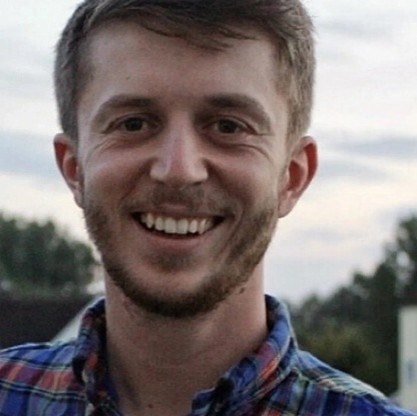
I joined the Healthy Low Carbon Transport Hub (HLTHub) in August 2025, shortly after the Hub was established, and I am particularly interested in connecting public health and engineering to understand how low carbon transport interventions influence health and health inequalities. My academic background is in life course epidemiology, with a focus on how early-life experiences and wider social determinants shape long-term health and social outcomes. Much of my recent research has centred on longitudinal birth cohort studies, which follow participants from birth and provide unique insights into how exposures throughout childhood influence outcomes later in life.
Before joining the HLTHub, my work on the MELD-B project explored how factors from pregnancy through to age 18 influence the future risk of developing multiple long-term conditions. Although low carbon transport, sustainability and net zero have not been areas of research I have previously worked in, they are topics that feel increasingly urgent and relevant. Joining the HLTHub has given me a valuable opportunity to expand my research interests and work collaboratively across disciplines to address major societal challenges. The Hub brings together experts in public health, engineering, transport, health economics and sustainability, and being part of this interdisciplinary community has been a central motivation for my involvement.
My role within the Hub sits within Workstream 1, led by Professor Nisreen Alwan and Professor John Preston. Our focus is on understanding how the Hub can develop shared ways of working across diverse disciplines and build a transdisciplinary conceptual framework that reflects the interactions, co-benefits and trade-offs across transport, health, environment and wellbeing. We hope this framework will serve as a guide to support project activities and inform methodological choices, targeted data collection and the focus of case studies. We have already made progress in several areas.
First, to explore how low-carbon transport and inequalities interact, we have completed a scoping review that synthesises how health inequality outcomes have been measured in evaluations of low-carbon transport interventions. From an initial 26,422 papers, 31 studies were included. Our general finding is that there is limited methodological consistency in how health inequalities are assessed. Future research should prioritise equity focused approaches to better understand the distributional impacts of decarbonisation.
Second, I have been supporting recruitment for the People’s Panel – a diverse group of community members who will provide lived experience insight and help shape the Hub’s research, priorities and decision making. I have been involved in shortlisting and interviewing potential panel members, and we have an interesting and exciting panel beginning to take shape.
Third, we have undertaken work to understand how members of the Hub view ways of working and identify key glossary terms commonly used across disciplines. A survey was circulated, and the findings have fed into a report and the launch of an internal monthly webinar series. These webinar series aim to open dialogue, unpack terminology, and identify opportunities for shared understanding.
Finally, we are continuing to refine the conceptual framework for the Hub. A first draft was presented at the September full team meeting, and since then the framework has evolved through several iterations informed by a rapid evidence review, internal feedback and a newly established working group with representation from all workstreams. A guide will be published that will set out the framework, its practical implications and how it can be used in practice.
Being part of the HLTHub has already been highly rewarding. The Hub embodies an ambitious, collaborative approach to tackle challenges around health, equity and low-carbon, and I am excited to contribute to its next steps.